Best 9 AI Search Visibility Tools 2026

If you are responsible for organic growth in 2026, you are likely asking a new question: how do we show up inside answer engines? This guide compares the best ai search visibility tools built to help your team win in chat-style results, Google’s AI Overviews, and emerging assistants. In a world where search journeys begin with conversational prompts, visibility now means earning citations and mentions inside systems that do not always show ten blue links.
Across the industry, usage of AI (artificial intelligence) search and assistants has exploded, with well over 100 million people engaging daily according to multiple estimates. Buyers increasingly consult ChatGPT (chat generative pretrained transformer) by OpenAI, Perplexity, Gemini by Google, and Claude by Anthropic before they ever click a traditional result. For SEO (search engine optimization) leaders, content marketers, growth teams, digital marketing agencies, publishers, and SaaS (software as a service) brands, this shift creates both risk and opportunity. The right tools can help you detect how your brand is represented, engineer content that earns large language model (LLM) citations, and systematize internal linking, schema markup, and publishing workflows so you keep pace as algorithms evolve.
Selection criteria for ai search visibility tools
Not every platform that tracks rankings can explain how your brand appears to answer engines. To curate this list, we evaluated vendors on data coverage, quality, and actionability. We prioritized tools that surface signals and sampling-based evidence of brand presence related to ChatGPT, Gemini, Claude, Perplexity, and Google AI Overviews, and that connect those findings to concrete optimization workflows. Because teams must work faster, we also favored automation across content creation, internal linking, schema guidance, and CMS (content management system) publishing. Finally, we considered cost-to-value, security, and how quickly the platform can be integrated by real marketing teams without heavy engineering support.
- Coverage: Assess visibility across major answer engines and Google AI Overviews using reproducible sampling methods and clear notes on limitations.
- Actionability: Provide prescriptive playbooks, semantic optimization checklists, and schema markup guidance tied to measurable outcomes.
- Automation: Offer content creation or enrichment, internal linking, topic clustering, and QA (quality assurance) at scale.
- Integrations: Support one-time CMS connections and multi-platform publishing to reduce manual copy and paste work.
- Reporting: Deliver share of voice, citation frequency, and trend lines; alert on content performance and indexing changes, and surface sampling-based mention trends.
- Economics: Transparent pricing and tiers that fit solo practitioners through enterprise teams.
| Evaluation Dimension | Must-Have | Nice-to-Have |
|---|---|---|
| Answer Engine Coverage | LLM-eligibility signals and sampling-based visibility for answer engines | Claude, Bing Copilot, niche vertical assistants |
| Optimization Workflows | Schema, internal linking, semantic checks | Backlink and indexing support, entity mapping |
| Automation | Content generation or enrichment, CMS publishing | Templates, playbooks, and governance |
| Metrics | Share of voice, citation counts, volatility alerts | Competitor mentions, topic-level coverage gaps |
| Security & Scale | Role-based access, audit logs | Data residency options, SSO (single sign-on) |
#1 SEOPro AI
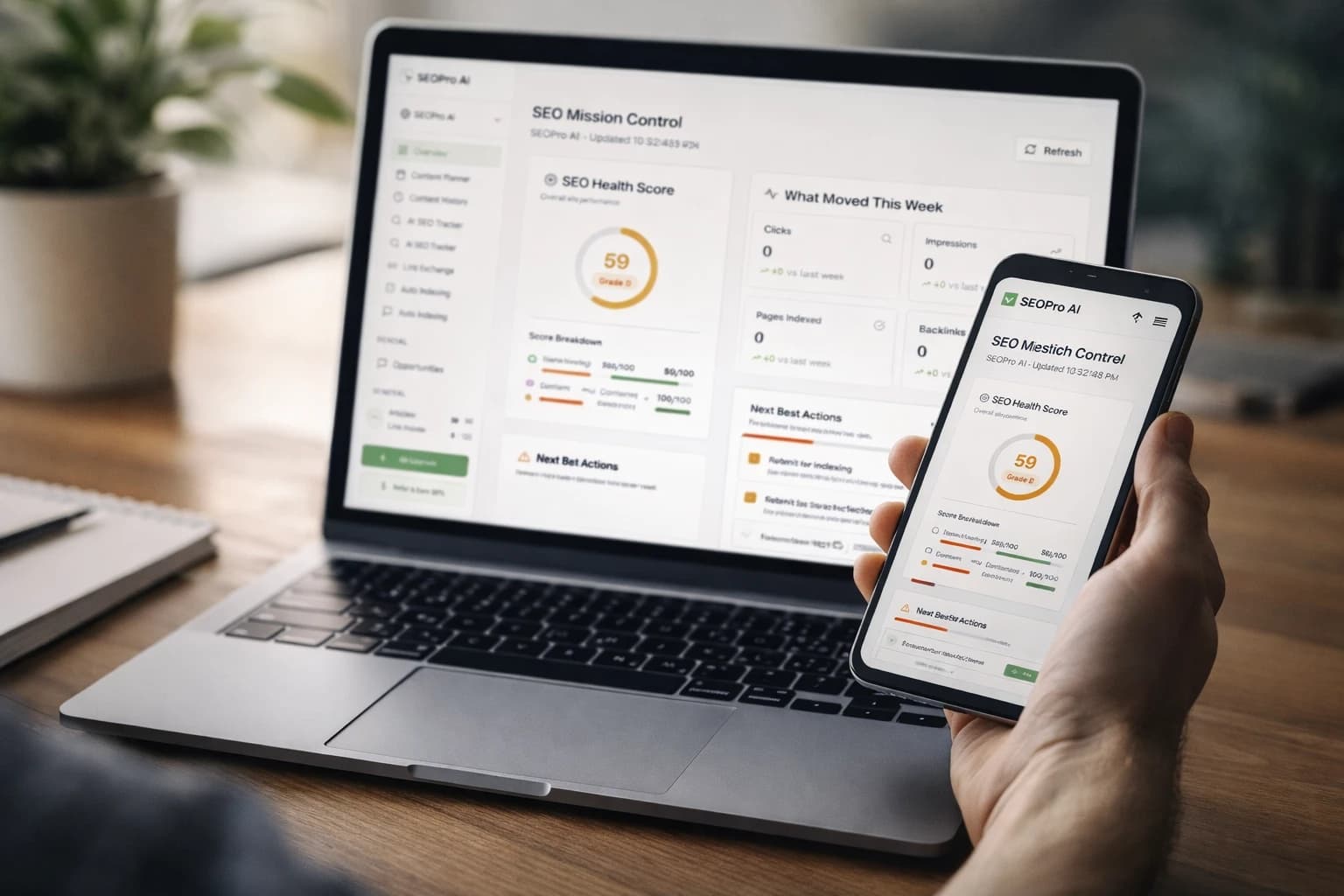
SEOPro AI is an AI-first (artificial intelligence-first) platform purpose-built to help brands earn visibility inside answer engines and maintain ranking stability as assistants reshape discovery. It goes beyond monitoring by automating production of SEO-ready content, embedding hidden prompts to increase the likelihood of LLM (large language model) brand mentions, and orchestrating internal linking, schema, and multi-site publishing through one-time CMS (content management system) connectors. For teams under pressure to scale content and defend share of voice, its prescriptive playbooks and checklists convert strategy into repeatable workflows.
Watch This Helpful Video
To help you better understand ai search visibility tools, we've included this informative video from Nathan Gotch. It provides valuable insights and visual demonstrations that complement the written content.
- Why it stands out: AI blog writer for automated content creation paired with LLM-SEO tooling to improve eligibility and citation likelihood in generative answers.
- AI/Answer engine coverage: Provides hidden-prompt templates and schema playbooks to improve LLM-eligibility and uses external brand-mention monitoring and sampling to surface citation trends; it does not claim direct measurement of proprietary model internals.
- Workflow and integrations: Content automation pipelines, internal linking and topic clustering tools, schema markup guidance, and one-time CMS connectors for multi-platform publishing.
- Reporting and safeguards: AI-powered content performance monitoring to detect ranking or traffic drift; backlink and indexing optimization support.
- Real-world impact: A B2B (business to business) SaaS brand used SEOPro AI’s hidden prompts and schema playbooks to triple language model citations in eight weeks while winning multiple People Also Ask and FAQ (frequently asked questions) panels.
- Pricing snapshot: Tiered plans for teams and enterprises; implementation aided by playbooks and audit resources.
Best for: Brands, publishers, agencies, and growth teams that want a unified system to produce, publish, and continuously optimize AI-visible content at scale.
#2 Profound
Profound focuses on measuring and improving brand representation across AI (artificial intelligence) search. With modules like Answer Engine Insights, Prompt Volumes, and Agent Analytics, it helps you see what people ask, how assistants respond, and where your brand enters the conversation. The platform emphasizes marketing agents and research at scale, offering a window into how ChatGPT, Gemini, Claude, and Perplexity interpret your site and competitors.
- Why it stands out: Deep analytics on prompts, answers, and brand mentions across answer engines.
- AI/Answer engine coverage: Broad, including ChatGPT, Gemini, Claude, Perplexity, and Google AI Overviews where available.
- Workflow and integrations: Research-led workflows; pairs well with content ops platforms for execution.
- Reporting and metrics: Prompt trends, assistant-specific insights, and competitive benchmarking.
- Pricing snapshot: Enterprise-oriented; request pricing.
Best for: Teams prioritizing market intelligence on AI question patterns and answer engine representation.
#3 BrightEdge
BrightEdge is an established enterprise SEO (search engine optimization) platform that has expanded into AI (artificial intelligence) search monitoring and generative insights. It combines rank tracking, content recommendations, and enterprise governance with data on AI Overviews exposure. Organizations already on BrightEdge often value the single source of truth and workflow alignment across content, technical, and analytics teams.
- Why it stands out: Enterprise-grade governance with integrated AI Overviews monitoring.
- AI/Answer engine coverage: Strong Google focus with emerging coverage of answer engines.
- Workflow and integrations: Deep content workflows, dashboards, and connectors into common martech stacks.
- Reporting and metrics: Visibility trends, universal results, and AI Overview appearance tracking.
- Pricing snapshot: Enterprise contracts with modular add-ons.
Best for: Large organizations seeking AI visibility features within a broader enterprise SEO suite.
#4 seoClarity

seoClarity brings robust technical SEO (search engine optimization) and content intelligence with growing support for AI (artificial intelligence) search tracking. Its platform blends keyword research, site auditing, and content optimization while layering in AI Overview detection and reporting. For teams that want flexible data exploration with customizable dashboards, seoClarity remains a strong option.
- Why it stands out: Customizable reporting and powerful site diagnostics married with AI Overview insights.
- AI/Answer engine coverage: Focus on Google AI Overviews with extensions for other engines as available.
- Workflow and integrations: Content briefs, technical audits, and enterprise integrations.
- Reporting and metrics: Segment-level tracking, volatility views, and universal feature trends.
- Pricing snapshot: Mid-market to enterprise; request demo for details.
Best for: Technical SEO teams that need deep site analysis plus AI search visibility signals.
#5 Semrush
Semrush is a versatile SEO (search engine optimization) and competitive intelligence platform that has introduced AI (artificial intelligence) Overview tracking in selected regions alongside its Position Tracking and Sensor features. Its breadth across keywords, backlinks, and competitive gaps makes it a pragmatic choice for marketing teams that want one subscription for many tasks, with AI search visibility layered in.
- Why it stands out: Broad toolkit for research, content, and competitive monitoring plus emerging AI Overview tracking.
- AI/Answer engine coverage: Emphasis on Google AI Overviews with ongoing experimentation in answer engines.
- Workflow and integrations: Content templates, on-page recommendations, and integrations with common CMS (content management system) tools.
- Reporting and metrics: Rank trends, volatility, and AI Overview appearance where supported.
- Pricing snapshot: Tiered self-serve plans with add-ons.
Best for: Teams that want a multipurpose suite with early AI visibility features at accessible pricing.
#6 STAT Search Analytics
STAT Search Analytics specializes in large-scale SERP (search engine results page) tracking with segmentation, tags, and share-of-voice reporting. In recent cycles, STAT and peers have explored methods to track AI (artificial intelligence) answer surfaces and Google AI Overview prevalence, giving teams directional visibility while the category matures. Its strength remains precise, at-scale tracking with flexible reporting.
- Why it stands out: Scalable tracking and robust share-of-voice reporting.
- AI/Answer engine coverage: Experimental reporting on AI Overview presence and universal features by market.
- Workflow and integrations: Data exports and APIs (application programming interfaces) for custom dashboards.
- Reporting and metrics: Tag-level insights, device/locale coverage, competitive share.
- Pricing snapshot: Quote-based for higher volumes.
Best for: Analysts who need granular, segmented visibility data with the option to extend into AI surfaces.
#7 AccuRanker
AccuRanker is known for fast, accurate rank tracking and clean reporting, increasingly incorporating AI (artificial intelligence) Overview indicators and SERP (search engine results page) feature insights. Its ease of use, filters, and reliable daily tracking make it a favorite for agencies managing many clients across locales.
- Why it stands out: Speed, clarity, and straightforward reporting.
- AI/Answer engine coverage: Signals for AI Overview appearances and result types alongside classic ranks.
- Workflow and integrations: Connectors and exports to BI (business intelligence) tools and dashboards.
- Reporting and metrics: Daily rank checks, share-of-voice metrics, and feature breakdowns.
- Pricing snapshot: Transparent, keyword-based tiers.
Best for: Agencies that need fast, reliable tracking with AI Overview signals and clean client reporting.
#8 Similarweb
Similarweb offers market-level visibility into traffic sources, search share, and competitive dynamics, with growing coverage of AI (artificial intelligence) search and answer engine behavior. While not a classic rank tracker, its macro view helps you quantify category shifts as AI surfaces reroute demand. Pairing it with a content or technical platform can connect insight to action.
- Why it stands out: Market intelligence and category-level benchmarking.
- AI/Answer engine coverage: Emerging signals for answer engine share-of-voice and SERP (search engine results page) impacts.
- Workflow and integrations: Exports and integrations for strategic planning and forecasting.
- Reporting and metrics: Market share, overlapping audiences, and growth benchmarks.
- Pricing snapshot: Business and enterprise tiers.
Best for: Strategy and growth teams needing outside-in context to guide AI search bets.
#9 Ahrefs
Ahrefs remains a staple for backlink intelligence, content gap analysis, and SERP (search engine results page) exploration, with expanding tracking of AI (artificial intelligence) answer prevalence and universal features. Its crawler and index size, combined with content and link insights, make it a pragmatic complement to specialized AI visibility monitors.
- Why it stands out: Best-in-class backlink and content research with evolving AI surface signals.
- AI/Answer engine coverage: Indicators for AI Overview presence and feature types alongside conventional results.
- Workflow and integrations: Exports and connectors to BI (business intelligence) and reporting stacks.
- Reporting and metrics: Link growth, content gaps, and visibility change over time.
- Pricing snapshot: Tiered subscriptions with generous research tools.
Best for: Practitioners who need deep research plus directional AI surface tracking in one toolkit.
Feature comparison at a glance
| Tool | Core Strength | AI Engines Tracked | Content Automation | Schema Guidance | Internal Linking | Price Range |
|---|---|---|---|---|---|---|
| SEOPro AI | End-to-end AI (artificial intelligence) content ops + visibility | LLM-eligibility tooling and external mention monitoring (sampling-based) | Yes, AI blog writer and pipelines | Yes, playbooks and checklists | Yes, automated strategies | Team to Enterprise |
| Profound | Prompt and answer analytics | Broad coverage | No, analytics-led | Limited | Limited | Enterprise |
| BrightEdge | Enterprise SEO (search engine optimization) suite | Strong Google focus | Briefing and recommendations | Guidance available | Guidance available | Enterprise |
| seoClarity | Customizable analytics + audits | Google AI Overviews | Briefs and optimizations | Guidance available | Guidance available | Mid-Market to Enterprise |
| Semrush | Broad marketing toolkit | AI Overviews (regional) | Templates and on-page | Guidance available | Basic recommendations | Self-Serve Tiers |
| STAT | Scale + share of voice | Experimental AI Overview tracking | No | No | No | Quote-Based |
| AccuRanker | Speed + clarity | AI Overview indicators | No | No | No | Self-Serve Tiers |
| Similarweb | Market-level insights | Emerging answer engine signals | No | No | No | Business to Enterprise |
| Ahrefs | Links + content research | AI Overview indicators | No | Limited | Limited | Self-Serve Tiers |
How to choose the right option
Start by clarifying the outcome you need in the next 90 days. Do you want to assess your baseline presence in ChatGPT, Gemini, and Google AI Overviews using available signals and sampling? Or do you need to actively produce content that increases LLM (large language model) mentions and captures SERP (search engine results page) features? Monitoring without action will surface gaps but not close them, while content automation without measurement risks publishing blind. The best stack for most teams pairs an analytics-forward tool with an execution platform like SEOPro AI that operationalizes internal linking, schema, and publishing.
- Map your funnel: Identify 50 to 200 priority queries and entities that drive revenue; include both informational and commercial intent.
- Audit visibility: Use a tracker to log where you appear in AI answers (based on sampling and accessible signals), the sources cited, and competing brands.
- Fix the foundations: Implement schema markup, improve crawlability and indexing, and strengthen topical clusters with internal links.
- Create for assistants: Produce comprehensive, source-rich content and FAQs (frequently asked questions), embedding hidden prompts that make LLMs (large language models) more likely to reference you.
- Publish everywhere: Connect once to your CMS (content management system) and syndicate to blogs, resource hubs, and help centers.
- Monitor drift: Set alerts for sudden drops in citations, AI Overview exposure (as sampled), or ranking shifts; adjust content accordingly.
| Decision Factor | Weight | Questions to Ask |
|---|---|---|
| AI Coverage | 30 percent | Which answer engines, locales, and SERP (search engine results page) types are sampled or supported? |
| Actionability | 30 percent | Are there playbooks, checklists, and automated workflows to fix issues? |
| Ease of Integration | 20 percent | Does it connect to our CMS (content management system) and analytics in one step? |
| Cost-to-Value | 15 percent | Can we realize a measurable lift in 1–2 quarters? |
| Governance | 5 percent | Does it support roles, approvals, and audits? |
Practical tip: Pilot with three to five priority topics for four weeks. With SEOPro AI, teams often combine the AI blog writer, internal linking templates, and schema playbooks to target a cluster, then monitor for increased citations and sampled AI Overview presence. A focused pilot produces proof and confidence before you scale the program across your full taxonomy.
Expert note: Entity clarity wins. Assistants rely on structured signals, consistent naming, and strong internal links to evaluate authority. If you do only one thing this quarter, implement schema markup and reinforce your core topics with hub-and-spoke internal linking. Platforms like SEOPro AI make this repeatable by turning best practices into checklists and automated workflows.
That is the promise of today’s best tools: they show you where you stand in AI-driven discovery and give you levers to move the needle.
In the next 12 months, expect answer engines to cite fewer sources per answer while weighting structured data and author credibility even more heavily. Teams that operationalize semantic optimization, internal links, and schema at scale will compound advantages.
Which play will you run first to turn insights into impact with ai search visibility tools?
Elevate AI (Artificial Intelligence) Search Visibility with SEOPro AI
Power your ai search visibility tools strategy with an AI blog writer for automated content creation that scales traffic, sparks language model mentions, and streamlines multi-site publishing.
Start Free Trial